
StarckHouse.club
The 3 Suisses autumn-winter 1994-95 catalogue
Chapter 3 of 13 6 min read Contents
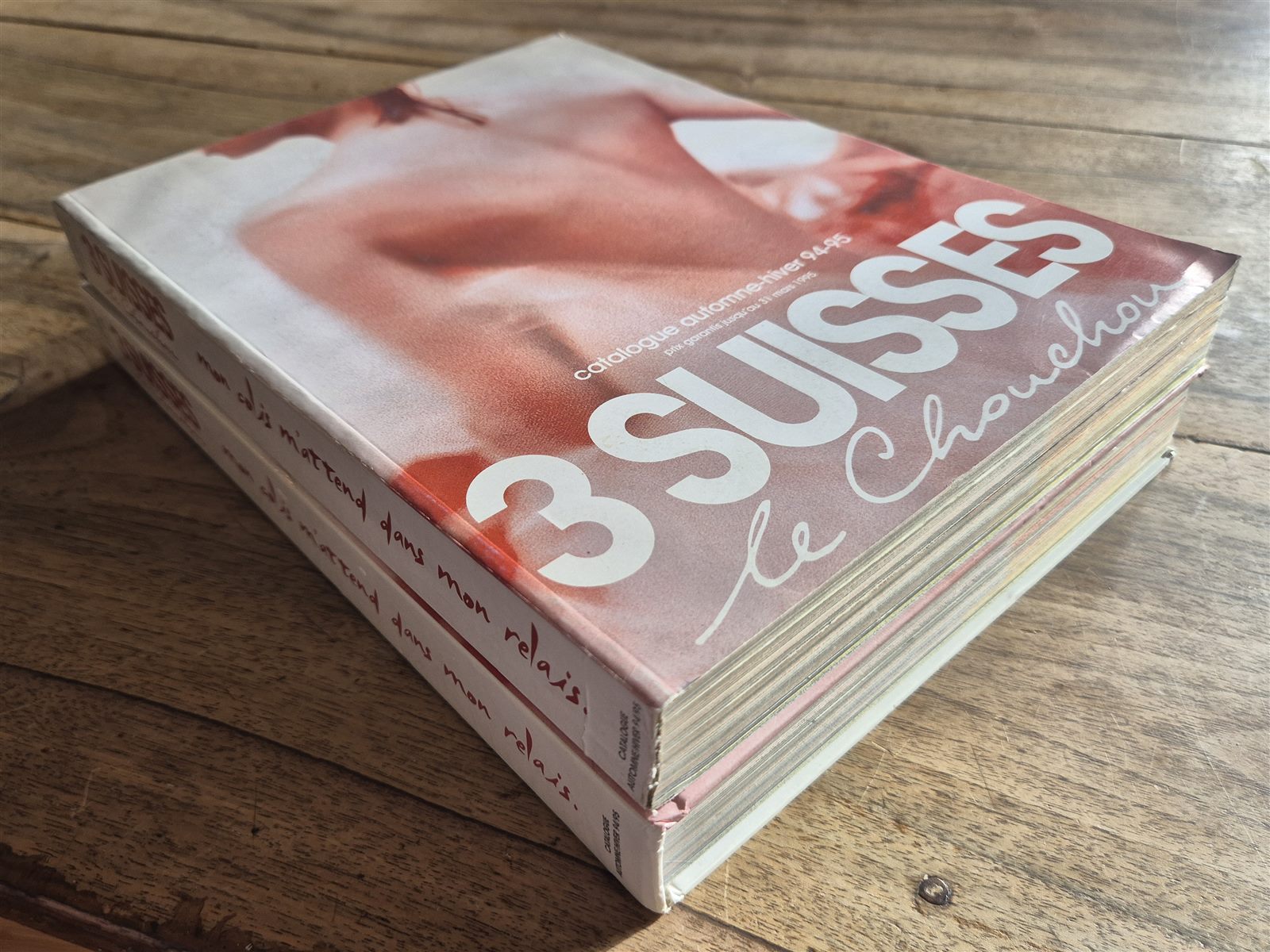
Two versions of the 3 Suisses autumn-winter 1994-95 catalogue?
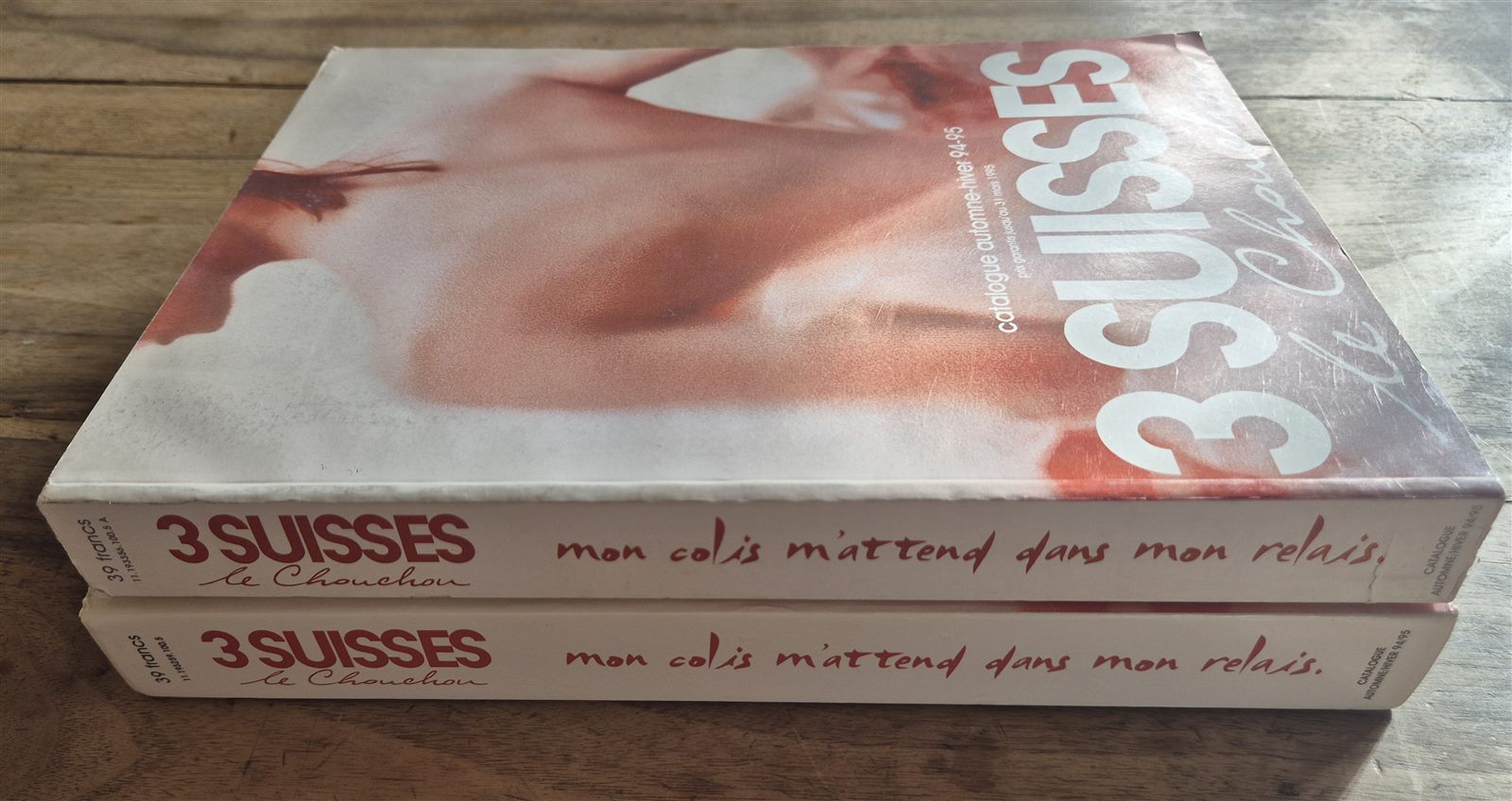
It is worth noting that there are two versions of the catalogue:
- The standard version (reference 11.193356.100.5 A) with its soft cover.
Today, it is fairly hard to find.
- The « ÉDITION SPÉCIALE » [“SPECIAL EDITION”], « Tirage limité réservé à nos meilleures clientes » [“Limited print run reserved for our best customers”] (reference 11.193259.100.5).
Yes: at 3 Suisses there were no male customers. Only female ones (« clientes »).
This version is a catalogue with a thick, rigid board cover.
Its special-edition status, but also the fact that it keeps better, means that more than thirty years later this catalogue is far easier to find than the standard version.
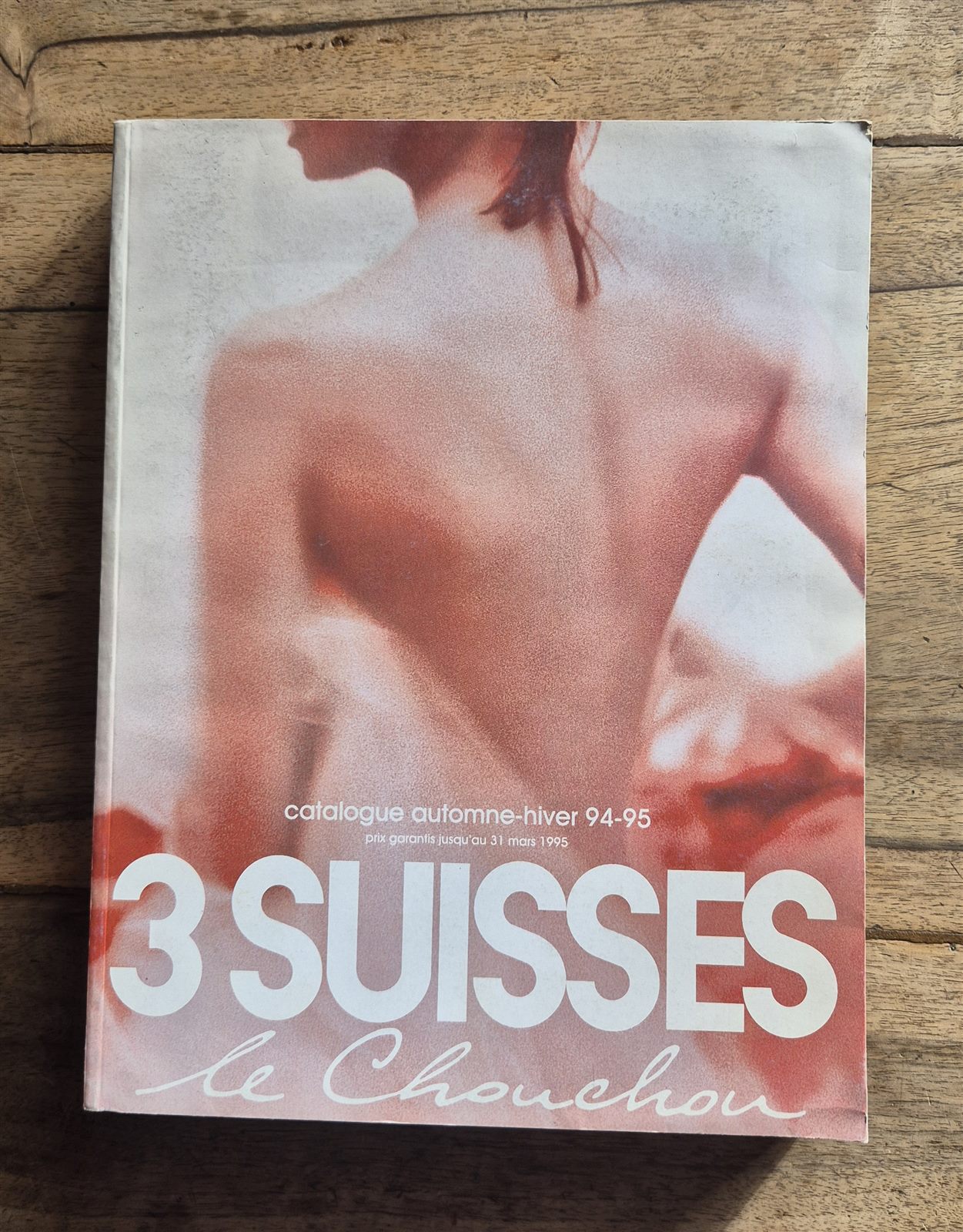
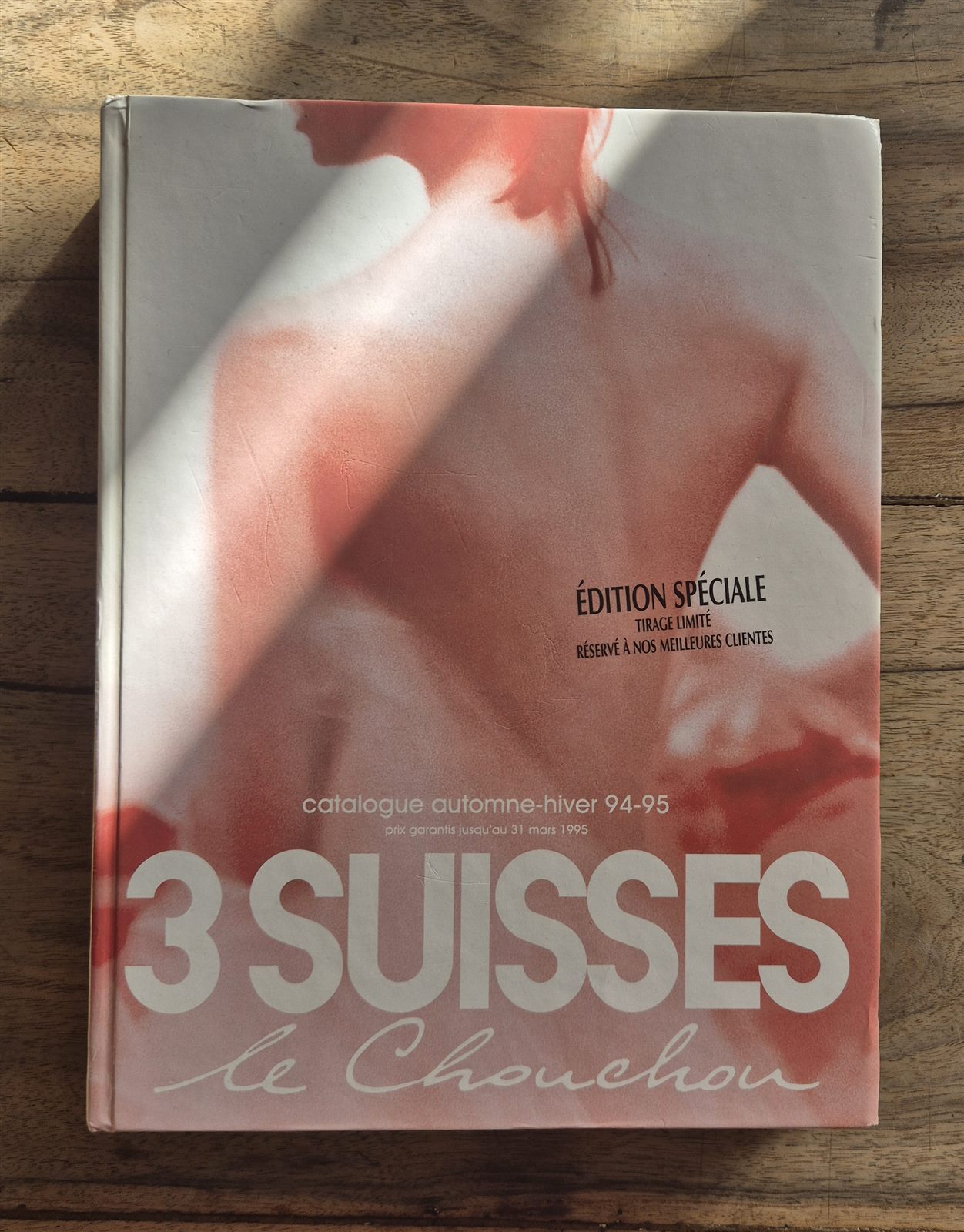
For example: of the 9 sales I was able to follow between September 2020 and October 2021, only one was of a copy of the standard version.
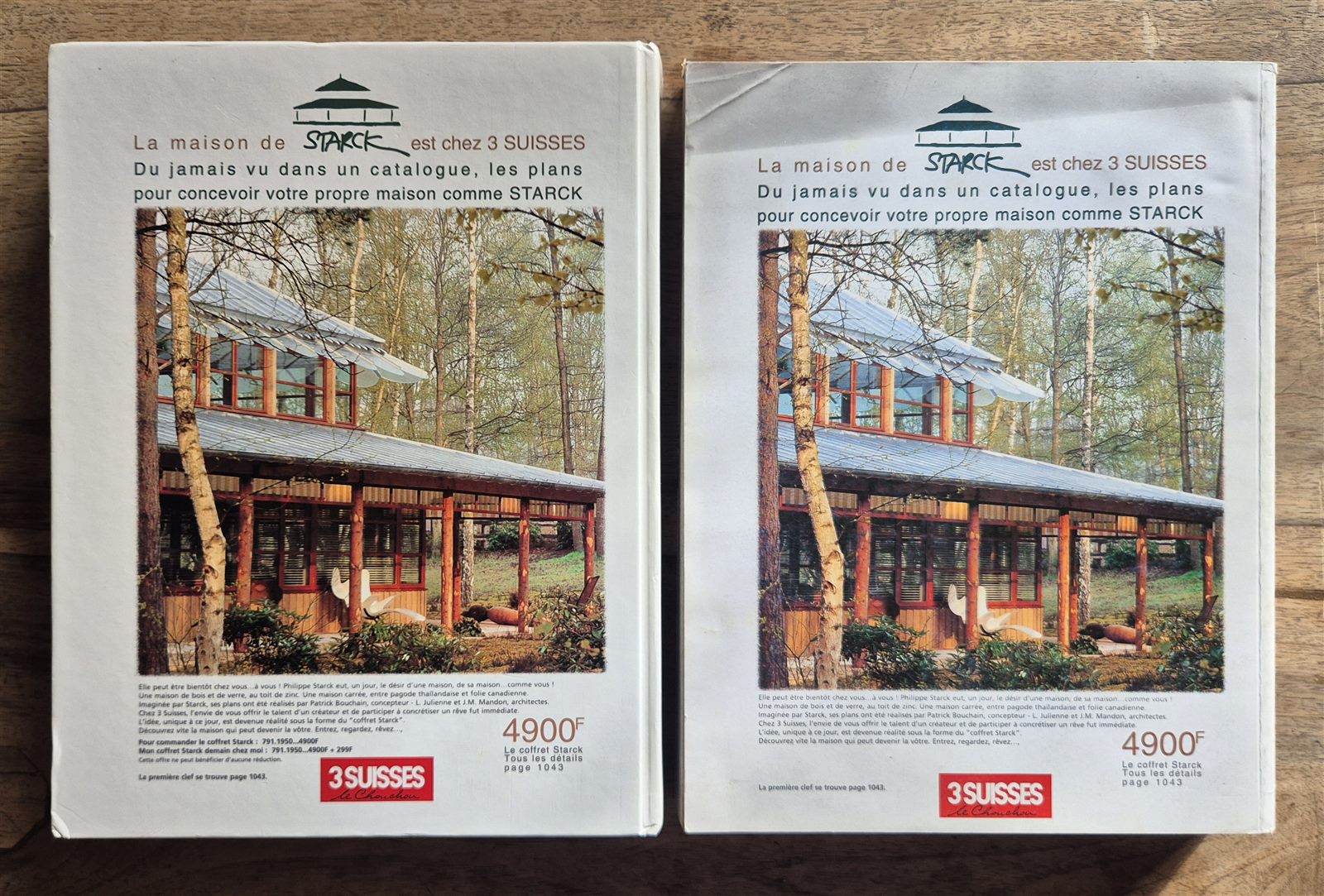
It is another detail, but the back covers are (very) slightly different.
On the hardback « SPÉCIALE » version, you find the reference of the Starck box and a reminder that this item can be sent by express delivery, the famous « Demain chez moi » [“At my door tomorrow”].
Amazon invented nothing.
6 pages for a dream
1043.
It all begins on page 1043 of this 3 Suisses autumn-winter 1994-95 catalogue, which has 1,048 pages.
The last 6 pages of the catalogue are devoted entirely to the Starck box.
The back cover of mail-order catalogues such as 3 Suisses or La Redoute was usually reserved for the most prominent products.
There, as on an end-of-aisle display, you would find high-tech goods or the year’s most emblematic products. TVs, telephones… the must-haves of the year were shown there.
But here, the Starck box does not get just one page.
It gets 6 whole pages!
Some will object that these last 6 pages come after the very end of the catalogue.
The “very end of the catalogue” that nobody read at the time, where all the legal obligations and help with ordering were usually relegated (hello, legal notice that nobody ever reads).
But never mind. 6 pages all the same.
These 6 pages are presented in a completely different way from the rest of the catalogue.
One simple example: these 6 pages are not numbered. As if suspended outside the catalogue, outside time, outside reality.
Ordering the house
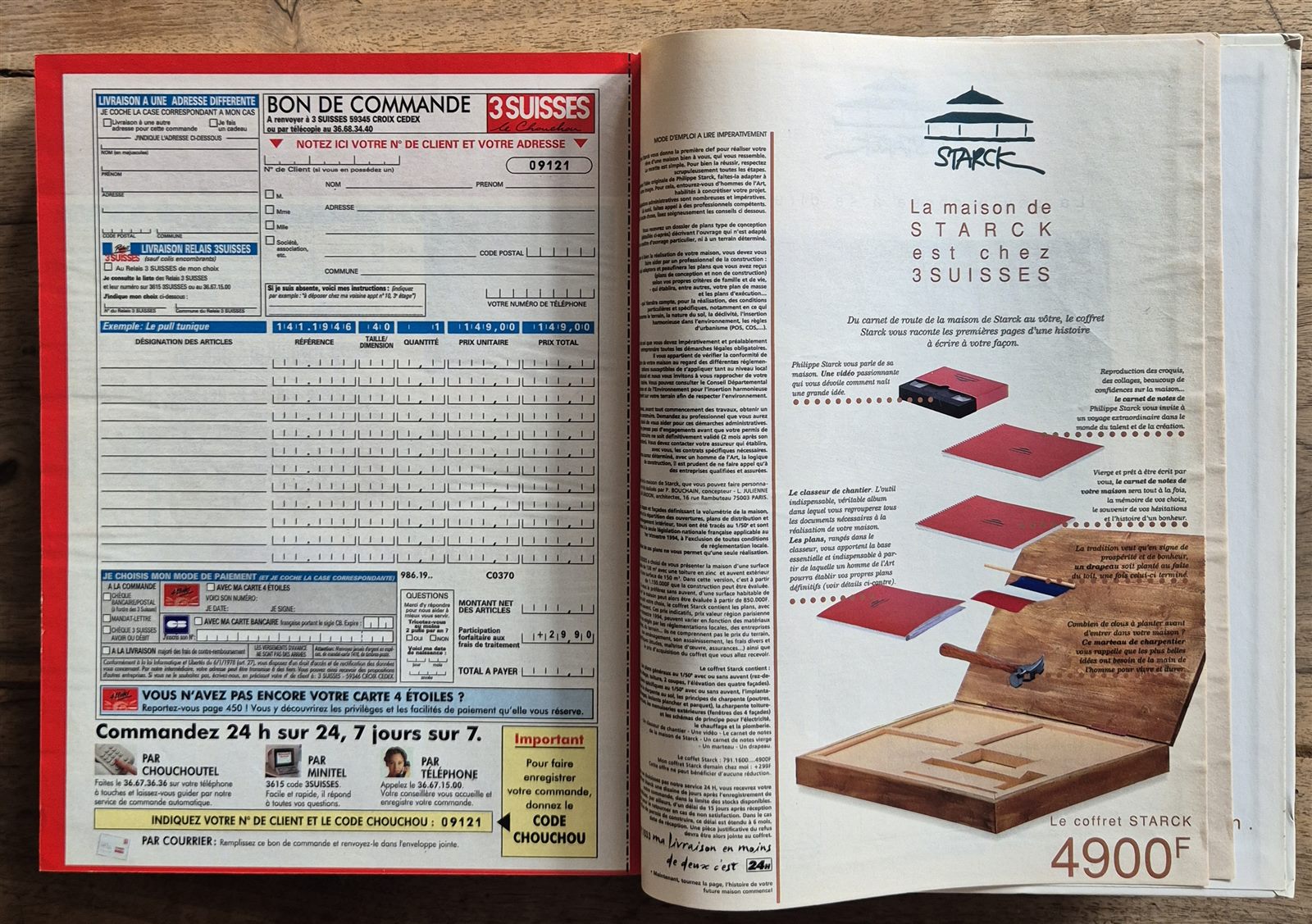
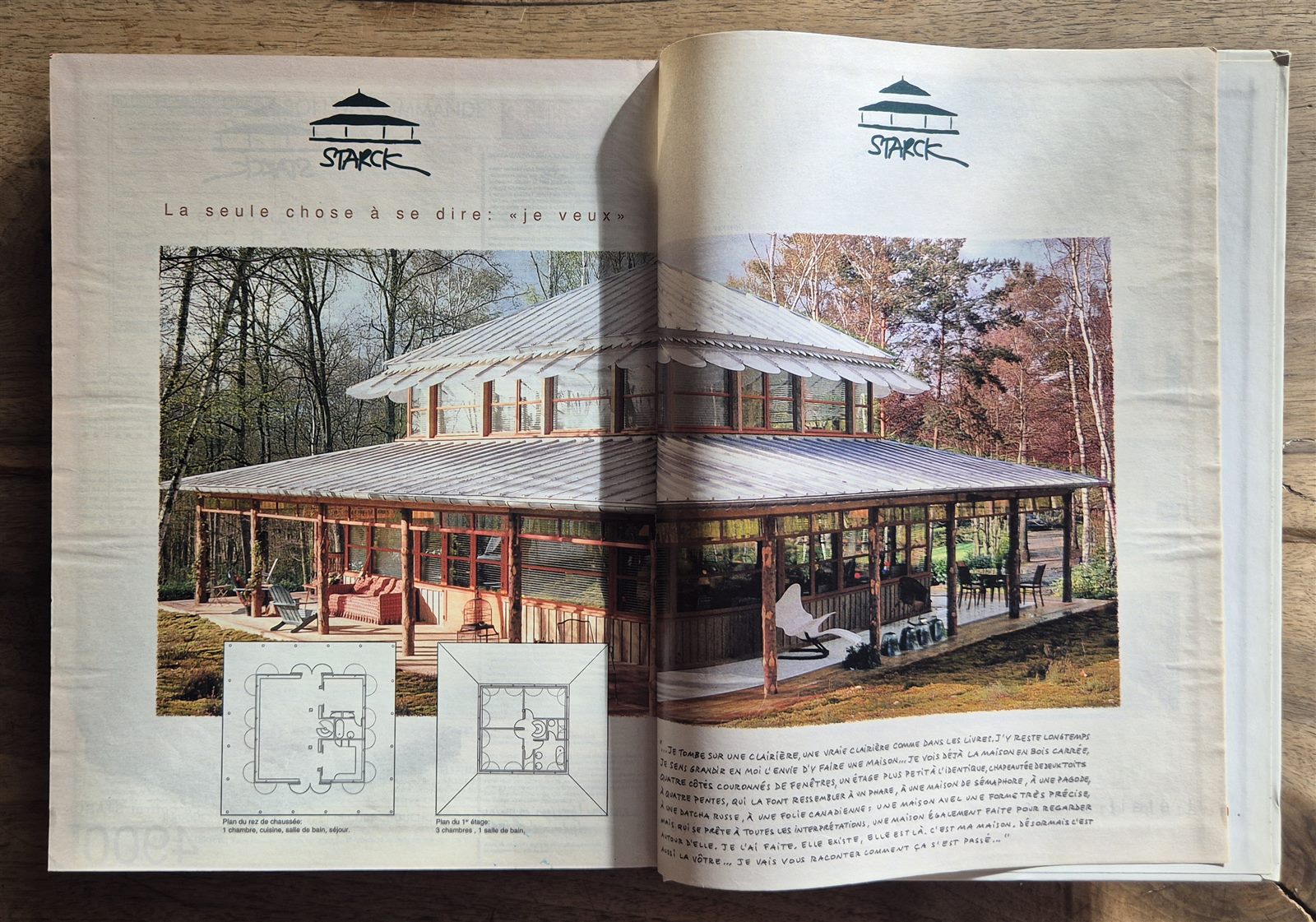
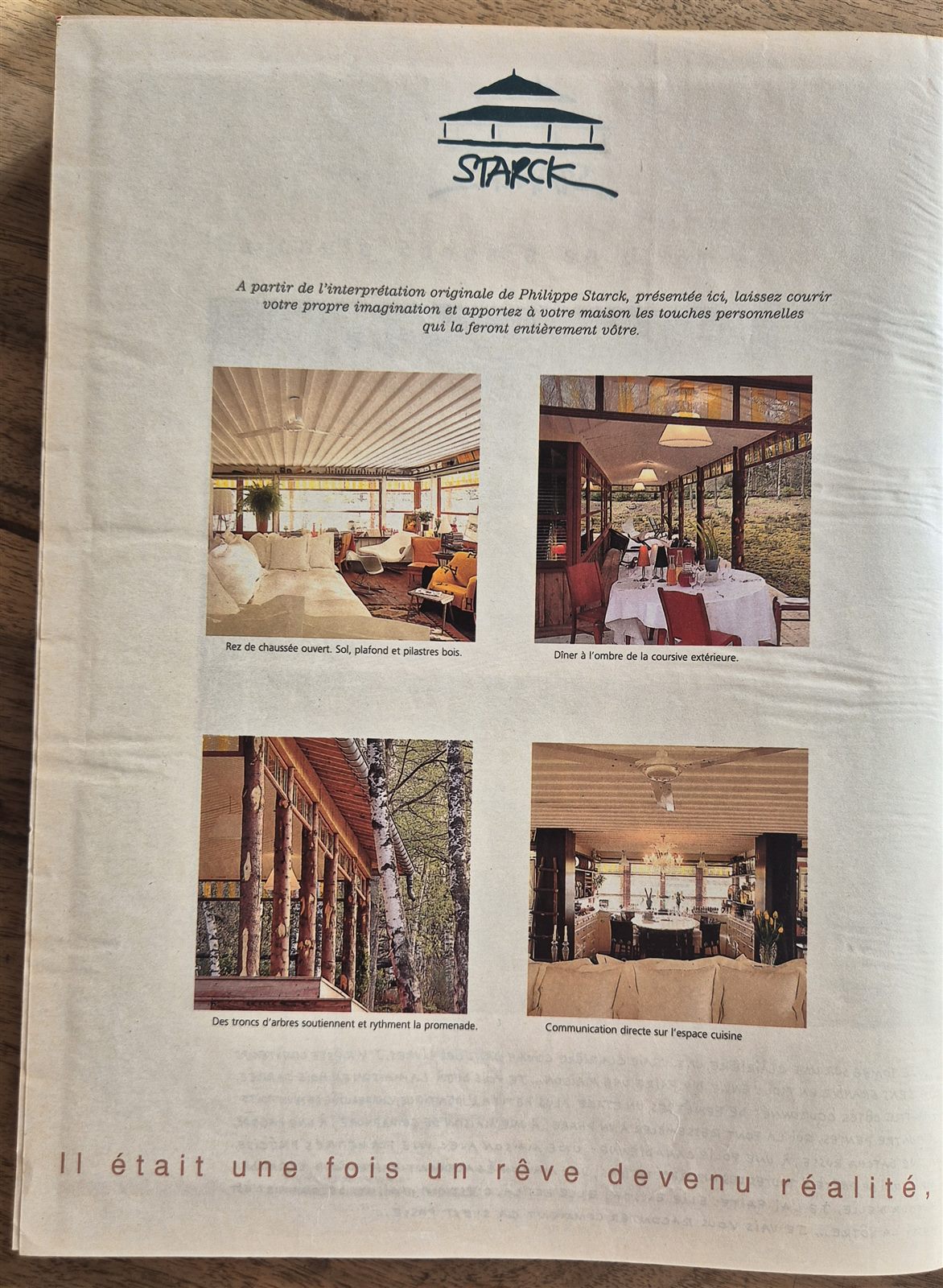
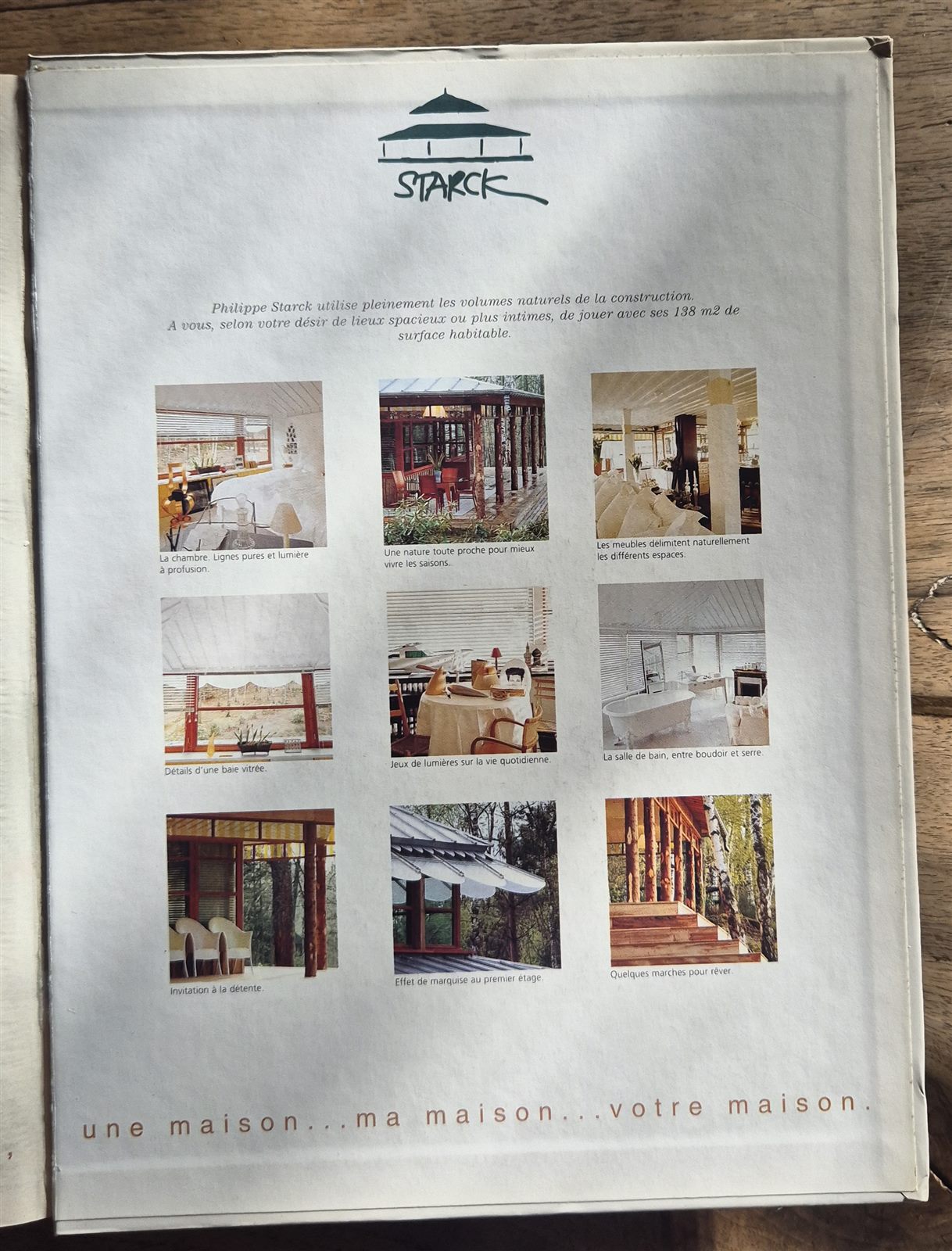
You ordered the house the way you ordered a skirt. The first of the six pages faces the order form: you copied out the reference 791.1600 (791.1950 on the back cover of the special edition) and 4,900 francs, or 299 francs more to receive it « demain chez moi ». « Cette offre ne peut bénéficier d’aucune réduction. » [“No discount can be applied to this offer.”] The full text of these pages is on the page the box in the catalogue.
In a clip from regional television archives, freely available on the INA website, a hand is in fact filling in a 3 Suisses order form: a skirt, then « 1 Maison Starck ».
I have still not worked out the reason for the double reference: 791.1600 in both versions of the catalogue, and 791.1950 only on the back cover of the « Édition spéciale » catalogue.
The cardboard box of my box 527 is marked with the box’s reference. Did the « meilleures clientes » [“best customers”] get a specific box?
That would need an investigation of its own!
7 million copies
The 3 Suisses autumn-winter 1994-95 catalogue had a print run of 7 million copies (La Vanguardia, 1994). According to Design Week (1995), it was read in a third of French households and sold for 39 francs at newsstands.
Starck had featured in it since 1984, and his Bubu stool had sold more than 100,000 units through it.
A “designer” page before Starck
Starck did not invent the formula.
3 Suisses had been having fashion collections signed by designers since 1977, and in 1983 the agency M.A.F.I.A. opened “designer pages” devoted to the home there: Philippe Boisselier signed the first furniture collection.
In the autumn-winter 1983-84 catalogue, the designers’ page is devoted to the Italian architect Gae Aulenti, with « quatre créations exclusives » [“four exclusive creations”]: an armchair in Canadian cedar, a lamp in Murano blown glass, a cotton rug and cutlery in brass and steel. So Starck took a place that already existed.
In the same catalogue: Starck and Newson
The box was not alone.
In the same autumn-winter 1994-95 catalogue, you could order Starck’s Dadada seat, in polypropylene, for 199 francs (« Oubliez l’immobile. Faites la révolution… » [“Forget standing still. Start a revolution…”]), and Marc Newson’s Gello folding table for 790 francs.
In this catalogue, their references begin with 791, like the box’s (791.1950): it was the designer range.
The seat at 199 francs, the table at 790 francs, the plans of a house at 4,900 francs.
In 2017, 3 Suisses gave several of these objects to the Musée des Arts décoratifs: three Miss Sissi lamps, three Bubu stools, the Dadada (the very one you could order from this catalogue, page 804), box no. 012 and a « tableau-coffret » [“box display panel”] in which the entire contents of the box are shown under glass, along with 35 fashion pieces from 1983 to 1999 (2017 annual report).
And afterwards?
In 1998, Le Monde noted that the plans of the house were « quotidiennement réclamés » [“requested daily”].
But Starck was then launching his Good Goods catalogue with La Redoute, the great rival: « avec les 3 Suisses, premiers à faire entrer des signatures dans leur catalogue, la rupture est consommée » [“with 3 Suisses, the first to bring big names into their catalogue, the break is complete”].
Nobody knows why 3 Suisses never reissued the box, or why the collection announced as early as 1992, with Frank Gehry, Jean Nouvel, Aldo Rossi, Norman Foster and Ieoh Ming Pei, never came to be.
Imagine living in a house designed by the architect of the Louvre pyramid… It gives me shivers.
If you worked at 3 Suisses at that time, write to me.
Documents reproduced on this page: the pages of the 3 Suisses autumn-winter 1994-95 catalogue. They remain the property of their authors and rights holders, and are shown for documentary purposes, to tell the story of the box, with no commercial use. Are you a rights holder and would like a document to be removed? Write to me: it will be removed without delay.